Co-development of a unified, evidence-based National Primary-Secondary School Transitions Strategy: Combining Academic Research with Policy and Practice Consultation
Welcome to our National Primary-Secondary School Transitions Strategy page. A unified, systemic, and evidence-informed National Primary-Secondary School Transitions Strategy is urgently needed in England, supported by the development and dissemination of best-practice guidance drawing on research, policy, and practice. Addressing this gap, below we outline the extensive research and multi‑stakeholder consultation that informed the co-development of our evidence-informed framework with key recommendations to inform a National Primary-Secondary School Transitions Strategy in England. We are now calling for educational policymakers to engage with the further development and dissemination of their National Primary-Secondary School Transitions Strategy, and for Local Authorities to engage with the rollout and implementation of this work more widely.
Our transitions strategy research paper, published in July 2026, can be found by clicking HERE.
Background
Primary-secondary school transitions are emotionally demanding, critical periods for 2/3 of children, who report stress and anxiety up to two years before starting secondary school (Bagnall et al., 2024).
Timely support is crucial, yet, in practice, the multiple and disparate challenges that primary-secondary school transitions present (e.g., academic discontinuities, relationship disjunctions, environmental and identity changes), can be difficult to manage, especially without a clear and consistent policy framework with statutory requirements and guidance documents.
Over the past decade, Government reports in England have consistently identified primary–secondary transitions as poorly managed and a systemic weakness (DfE, 2025), and the Department for Education have reiterated that ‘a greater focus on transition periods in children and young people’s lives is needed’ (DfH & DfE, 2018, p.13), with many children believed to be ‘lost in transition’ (Children’s Commissioner, 2024, p. 96).
Educational practitioners have raised issues of not knowing what to prioritise, how, and when. This has resulted in support for transition being locally interpreted by schools and Local Authorities, leading to variation in quality and implementation, under-resourcing, and/or shared gaps, underscoring the need for evidence-informed statutory guidance (Bagnall et al., 2025).
This inconsistent support is concerning recognising the body of evidence demonstrating the detrimental impact poor experiences of primary-secondary school transitions can have on children’s academic attainment, attendance, social adjustment and mental health, especially for more disadvantaged groups (Donaldson et al., 2025; Bagnall et al., 2025).
Thus, a systemic, evidence-informed approach to primary–secondary school transitions is urgently needed, supported by the development and dissemination of best-practice guidance drawing on research, policy, and practice.
Our work combining academic research with policy and practice consultation
We have spent the past two years triangulating multiple stakeholder perspectives and multidisciplinary evidence to co-develop a unified, evidence-based framework with key policy recommendations to inform a National Primary-Secondary School Transitions Strategy in England.
A rigorous systematic literature review was firstly conducted to synthesise UK research published between 2008 and 2025, to identify evidence-based priority areas to improve this period, addressing our first research question:
1. What are the key priority areas identified within existing UK research to improve primary-secondary school transitions practice in the UK?
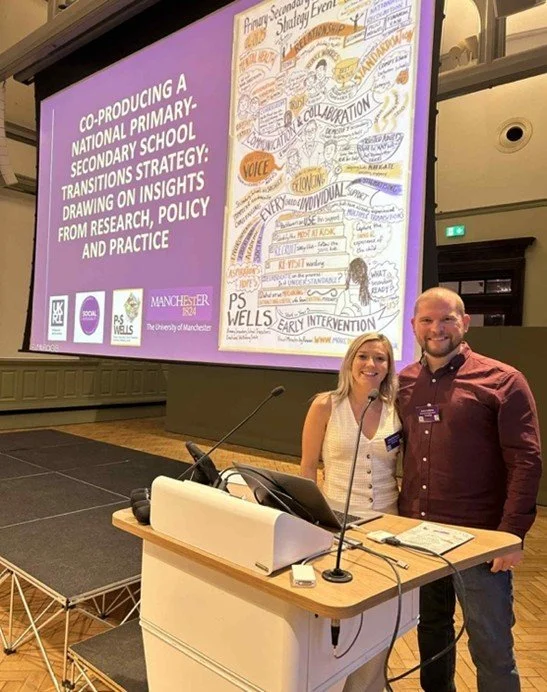
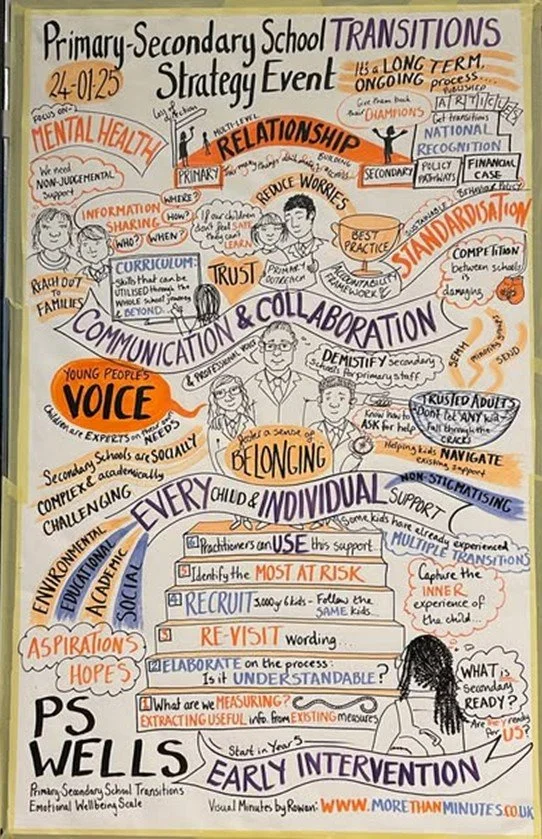
Building on these insights, on Friday 24th January 2025, we held a National Primary-Secondary School Transitions Strategy Event to aggregate the multi-disciplinary perspectives of 52 experts, leading on gold-standard primary-secondary school transition provision within educational practice, research, and policy, nationwide. We did this via 10 round-table discussions, to address Research Questions 2 and 3:
2. What are the facilitators and barriers of “gold-standard” primary-secondary school transitions provision at the (a) child level; (b) family level; (c) school level; (d) Local Authority level; and (e) national level?
3. What are the key priority areas that should be included in a primary-secondary school transitions strategy in England, and what support, measurable objectives, and quality markers would be useful to implement this strategy?
Data were analysed using Thematic Framework Analysis, and meta-inferences were then drawn to develop an evidence-based framework outlining five actionable policy recommendations, and within each detailed actions, which are outlined below.
Policy Recommendations for a Primary-Secondary School Transitions Strategy in England
Policy Recommendation 1
Establish a national standardised framework for information sharing between primary and secondary schools to ensure consistency, accuracy, and continuity in supporting children over primary-secondary school transitions. This framework should outline the essential data to be shared, timelines for transfer, and protocols for collaboration between schools.
Key actions may include:
Developing a national information-sharing template outlining key academic, wellbeing, friendship and socio-demographic data to accompany each child. It is important that the child and families have an input in this, and consent to data sharing.
Creating a centralised digital platform to securely facilitate and standardise data exchange between schools and across Local Authorities.
Encouraging joint transitions meetings between primary and secondary staff to discuss individual needs, particularly for vulnerable learners.
Introducing mandatory timelines for data transfer to ensure secondary schools receive relevant information in advance of transition planning.
Embedding accountability measures to monitor compliance and the quality of information sharing at both school and Local Authority levels.
Policy Recommendation 2
Develop national standards for facilitating gradual exposure and familiarity during primary-secondary school transitions to support children’s emotional and social adjustment over time. These standards should aim to reduce logistical and administrative barriers that limit opportunities for primary school children to engage with their future secondary schools.
Key actions may include:
Introducing earlier and more frequent transitions visits (e.g., beginning in Year 5 or equivalent to use the gym at secondary school etc.).
Designated days at the start of term where only Year 7 and a buddying year (e.g. Year 9) attends, to support integration and confidence-building.
Establish nationally co-ordinated transitions visit days across Local Authorities to ensure greater consistency of practice and equity in transitions experiences for children.
Providing an online transitions package for parents/carers and children (including virtual tours, staff introductions, and peer relationship guidance when children are in the last year of primary school).
Encouraging innovative, locally adapted approaches to enhance children’s familiarity and sense of belonging prior to their transfer to the -secondary school.
Policy Recommendation 3
Ensure that all schools have timely access to high-quality, evidence-informed transitions support that promotes effective and equitable primary–secondary transitions. This provision should align with national pastoral priorities, include mechanisms for sharing best practice across schools and Local Authorities, and embed transitions-related criteria within Ofsted inspection frameworks to strengthen accountability and consistency.
Key actions may include:
Designing a national primary-secondary school transitions skills-based curriculum which develops children’s awareness, knowledge and ability to manage the multiple changes they will experience over primary-secondary school transitions, through scaffolding socio-emotional and interpersonal skills across, at least, the last two years of primary school and first year of secondary school (e.g. the Talking about School Transitions 5-7 curriculum).
Developing a national repository of evidence-informed primary-secondary school transitions resources and case studies, accessible to all schools and Local Authorities.
Establishing regional communities of practice networks and partnerships to facilitate knowledge exchange, sharing and scaling of effective primary-secondary school transitions practices.
Providing professional development opportunities for school staff on implementing and adapting primary-secondary school transitions curricula to meet children’s needs on a universal and targeted basis. This could also be included in Initial Teacher Education programmes.
Including family engagement and support as an integral component of transition planning, ensuring parents and carers are informed, equipped, and involved in the process.
Formalise minimum practice standards for primary–secondary transitions for both primary and secondary schools through legislation or statutory guidance, e.g. embed transitions planning and support within school improvement and pastoral care frameworks, promote transitions focused quality marks (e.g. Moving On Well Award), and/or include transitions quality indicators in Ofsted criteria focused on wellbeing, inclusion, and transitions preparedness.
Policy Recommendation 4
Develop a national approach to monitoring children’s emotional wellbeing and ensuring early identification of emotional needs to promote timely, targeted support during primary–secondary school transitions. A consistent framework would enable schools to identify emerging concerns, intervene proactively, and reduce the escalation of mental health difficulties.
Key actions may include:
Establishing a nationally standardised wellbeing monitoring framework for use across all primary and secondary schools, incorporating validated assessment tools (e.g. the #P-S WELLS survey), with embedded routine emotional wellbeing screening at key transitions periods (e.g., across Year 5, 6, 7 and 8).
Integrating emotional wellbeing indicators into school self-evaluation and Ofsted inspection criteria to promote accountability.
Build staff capacity and early intervention systems by training school staff to recognise and respond to early signs of poor emotional wellbeing, ensuring clear referral pathways and timely access to early help services for children identified as at risk.
Create structured and proactive processes across primary and secondary schools that involve family engagement, partnership and communication to support children’s emotional wellbeing during primary-secondary school transitions.
Policy Recommendation 5
Promote continuity of pedagogical approaches across primary–secondary transitions to ensure coherence in learning progression, reduce academic disruption, and support children’s confidence and engagement. A nationally guided but locally adaptable framework should align curriculum expectations, pedagogical approaches, and assessment practices across Key Stages 2 and 3.
Key actions may include:
Developing national guidance on curriculum alignment between primary and secondary phases, particularly in core subjects such as English, Mathematics, and Science, and include curriculum continuity indicators within evaluation and accountability frameworks (e.g., Ofsted).
Promote cross-phase curriculum collaboration by encouraging joint planning and moderation between Year 6 and Year 7 teachers, and cluster-based partnerships to develop shared teaching resources, coherent progression frameworks, and cross-phase projects.
Providing professional development opportunities focused on transitions pedagogy and curriculum bridging strategies.
Embedding formative assessment practices that recognise prior learning and identify gaps early in the secondary phase.
Encouraging family and child knowledge exchange to foster a shared sense of academic progression and purpose.
N.B. in reference to “National” recommendations specifically pertain to the English educational system. Our authorship team, which includes representation from all four nations, was well positioned to synthesise evidence from across the UK to inform the development of an evidenced-informed primary-secondary school transitions strategy for England.
The full research paper will be accessible here: Bagnall, C.L., Edge, D., Banwell, E., Seymour, R., Garnett, N, Mason, C., Panayiotou, M., Jindal-Snape, D., Packer, R., Hodgkin, K., Skerritt, C., Donaldson, C., Birchwood, J., McAreavey, A., Cunningham, E., Symonds, J.E., & Holliman, A. (2026). A Mixed-Methods Study of How to Improve Primary-Secondary Transitions in England: Combining Academic Research with Policy and Practice Consultation. Educational Psychology Review. 38(98). https://link.springer.com/article/10.1007/s10648-026-10174-z

Next steps and recommendations – call for dissemination of our National Primary-Secondary School Transitions Strategy in England
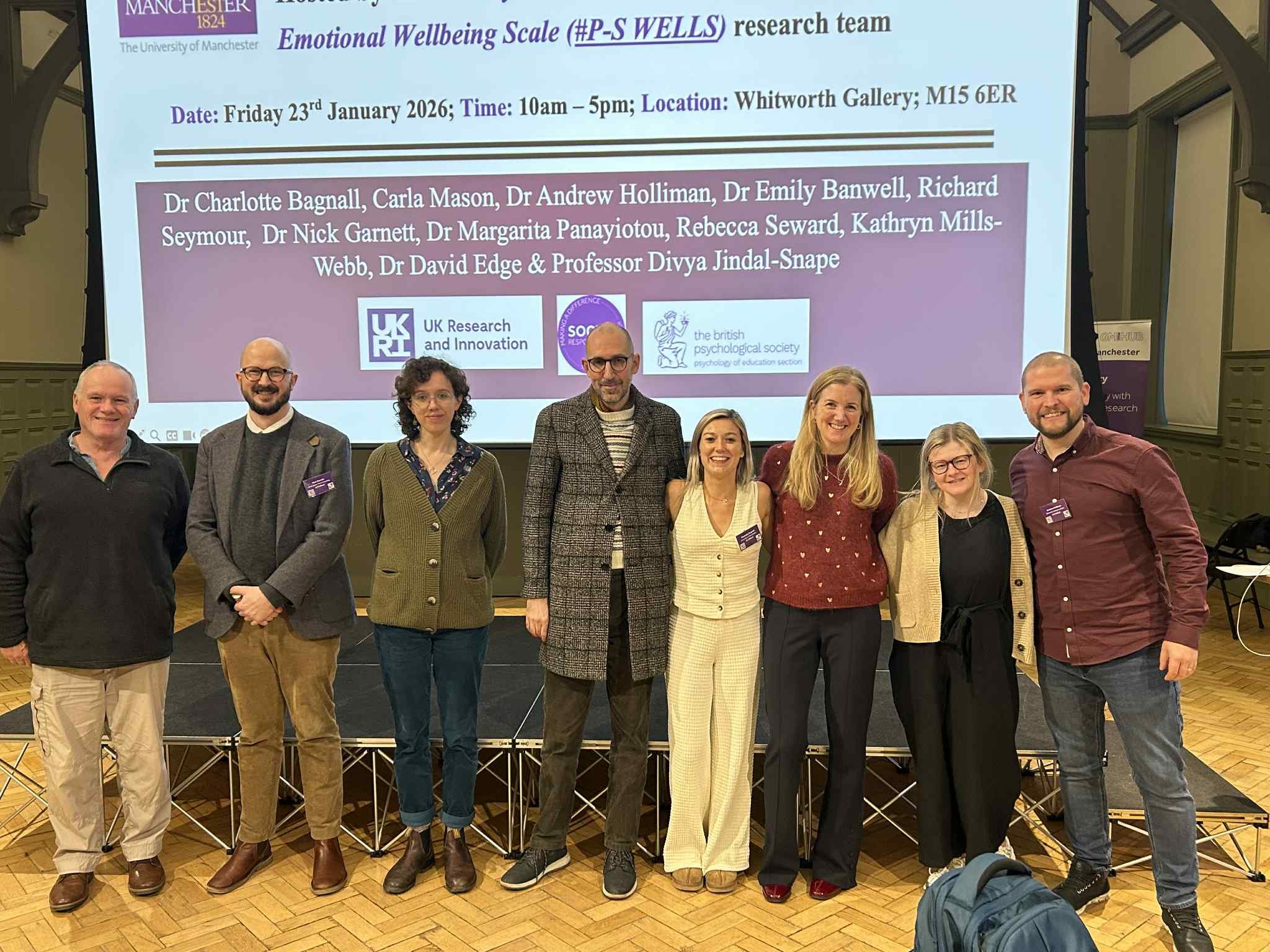
On Friday 22nd January 2026, we held a second National Primary-Secondary School Transitions Strategy event to further refine the above recommendations, and evidence (a) how the recommendations respond to identified needs within primary–secondary transition provision; (b) integrate research evidence with further insights from practice and policy, and obtain exemplars of effective practice; and (c) identify the conditions, enablers, and mitigations required to optimise implementation and impact. To do this we again drew on the multi-disciplinary perspectives of 75 experts leading on primary-secondary school transitions provision within educational practice, research and policy, nationwide.
Following data analyses, we will prepare a yellow paper outlining our finalised detailed recommendations, alongside supporting case studies of “gold-standard” practice, which we will address to UK Parliament (and further academic and non-academic publications).
We are now calling for educational policymakers to engage with us on this next step, and to support further development and dissemination of our National Primary-Secondary School Transitions Strategy. We are also calling for Local Authorities to engage with the rollout and implementation of this work more widely.